Nutcracker Silly Smile Embroidery Design
First Impressions: Bold, Playful, and Purposefully Minimal
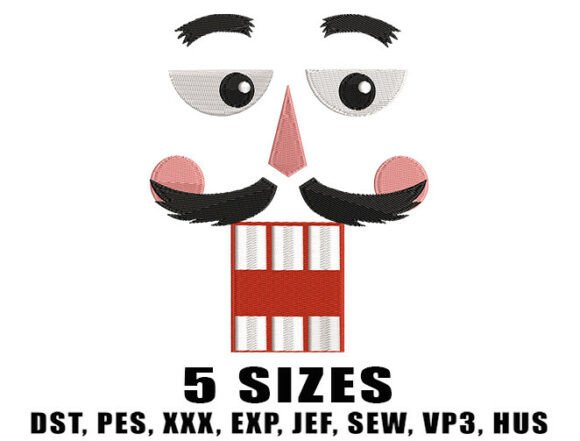
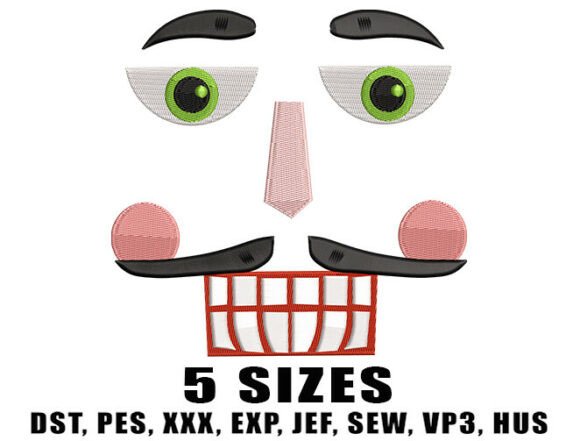
When I opened the Nutcracker Silly Smile Embroidery Design file, I didn’t see a traditional nutcracker—no ornate uniform, no stiff posture, no gilded details. Instead, I saw a confident, slightly mischievous character with exaggerated eyes and a wide, lopsided grin. The simplified shape feels intentional, not stripped-down by accident. Darker tones and fewer colors give it weight and clarity—like a bold ink stamp rather than a watercolor sketch. It’s unmistakably Christmas, but it doesn’t lean on nostalgia alone. It leans on personality. That makes it ideal for makers who want holiday spirit without clutter—think boutique sweatshirts, modern tea towels, or baby onesies where whimsy reads louder than tradition.
A Real Project Test: Embroidering It on a Black Cotton Tote Bag
Last week, I stitched the Nutcracker Silly Smile Embroidery Design onto a heavyweight black cotton tote for a local gift shop launch. Why black? Because the product description promised high contrast—and it delivered. On light fabric, the design would still read clearly, but on dark, it *pops*: the satin-stitched smile holds its shape, the fill-stitched face stays dense without bleeding, and the running-stitch outline adds just enough definition to keep edges crisp. No floating threads. No skipped stitches—even at moderate speed. That tells me the stitch density is well-balanced: not so sparse it looks thin, not so heavy it buckles lightweight stabilizer. For small business owners stitching dozens of totes before holiday markets, that reliability matters more than flashy detail.
Where It Shines (and Where It Asks for Thought)
- Custom apparel: Works beautifully on crewneck sweatshirts and structured caps—especially when placed front-and-center. The simplified face avoids distortion over curved surfaces.
- Baby embroidery: Gentle proportions and clear features make it friendly on onesies and burp cloths—but avoid ultra-thin jersey without cutaway stabilizer.
- Embroidered patch: Clean lines and minimal color shifts mean it sews cleanly as a sew-on or iron-on patch. Great for craft fairs or Etsy bundles.
- Holiday gifts & boutique branding: Its playful tone bridges generations—grandparents chuckle, kids point, teens don’t roll their eyes. That versatility is rare in seasonal embroidery files.
Use With Intention—Not Assumption
This isn’t a one-size-fits-all machine embroidery design. Its strength is in contrast and clarity, so it needs thoughtful pairing. On textured fabrics like terry cloth or bouclé, test first—the bold lines can get visually “lost” if the base fabric fights the stitch definition. On stretchy knits, use tear-away + light cutaway stabilizer; the design’s minimal detail won’t forgive puckering. And while it’s perfect for dark fabric, don’t assume it’ll read equally well on navy *and* charcoal without checking thread color contrast in your actual setup. Also: avoid placing it near tight seams or hems unless you’ve confirmed hoop clearance—those clean outlines need breathing room.
How It Shapes Your Finished Product—Beyond Just Looks
The Nutcracker Silly Smile Embroidery Design quietly lifts perceived value. Because it’s simplified—not simplistic—it reads as intentional design, not a clip-art afterthought. Customers notice that. A handmade product with this design feels curated, not mass-produced. For Etsy sellers, that translates to better photo mockups, stronger buyer engagement, and fewer “Is this really hand-embroidered?” questions. On personalized gifts, it adds warmth without sentimentality—ideal for non-traditional families, queer-friendly holiday collections, or inclusive nursery decor. And for commercial embroidery shops? It scales well across garment types without needing redesigns for each size—just minor digitizing tweaks for cap vs. tote proportions.
Practical Designer Notes You’ll Actually Use
- Always run a test stitch on scrap fabric matching your final project’s weight and weave—especially if using dark thread on dark fabric.
- Review the embroidery file in black-and-white mode first. If key shapes vanish or blur, adjust thread contrast before production.
- Check how small details hold up at 3–4 inches wide—the eyes and smile corners should stay legible, not merge into blobs.
- Compare it side-by-side on light and dark fabric mockups. Does the mood shift? (It shouldn’t—this design holds its personality.)
- Confirm stabilizer choice: medium-weight cutaway for knits, tear-away for stable wovens, and avoid basic fusible web for anything washable.
- If selling finished items, verify licensing terms—some digital embroidery files allow personal use only, while others cover small-batch commercial embroidery.
- For printable mockups or digital product previews, use the simplified shape to your advantage—it renders cleanly at low resolution and loads fast for Etsy listings.
Final Thought: A Design That Serves the Maker First
So many holiday embroidery files chase complexity—more colors, more stitches, more “festive.” The Nutcracker Silly Smile Embroidery Design does the opposite: it strips back to what works, then doubles down on execution. It’s not trying to be everything. It’s trying to be *right*—for dark fabric, for minimalist branding, for quick-turn custom orders, for makers who value clarity over clutter. Whether you’re stitching a single personalized gift or prepping fifty tote bags for a pop-up shop, this design saves time without sacrificing charm. And in the craft business, that balance—between efficiency and authenticity—is where real momentum begins.